Another ride through history and the fascinating stories of our ancestors.
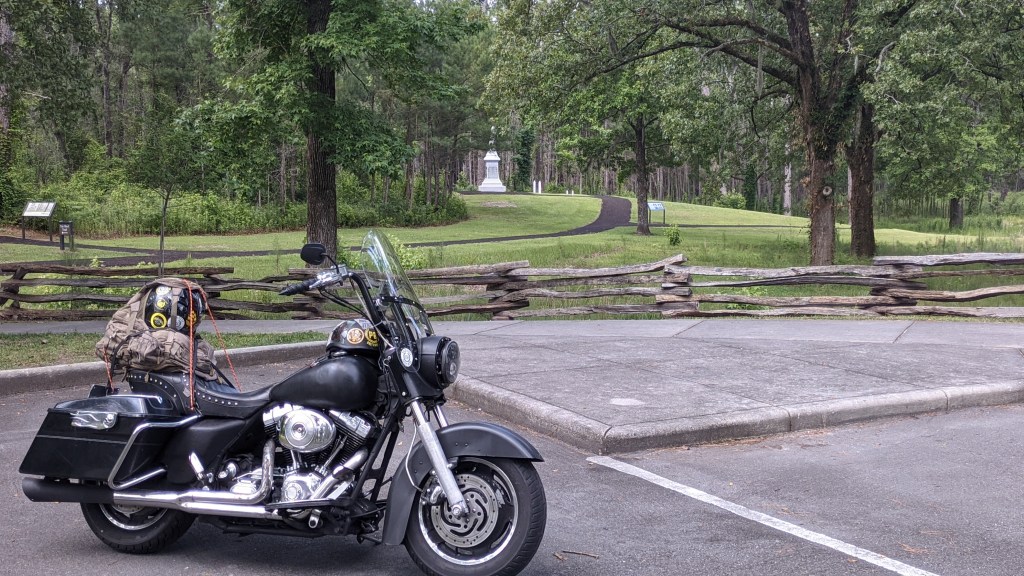
Today I wandered along a back country North Carolina road into a quiet little meadow near a small creek. What happened here would forever change the course of history.
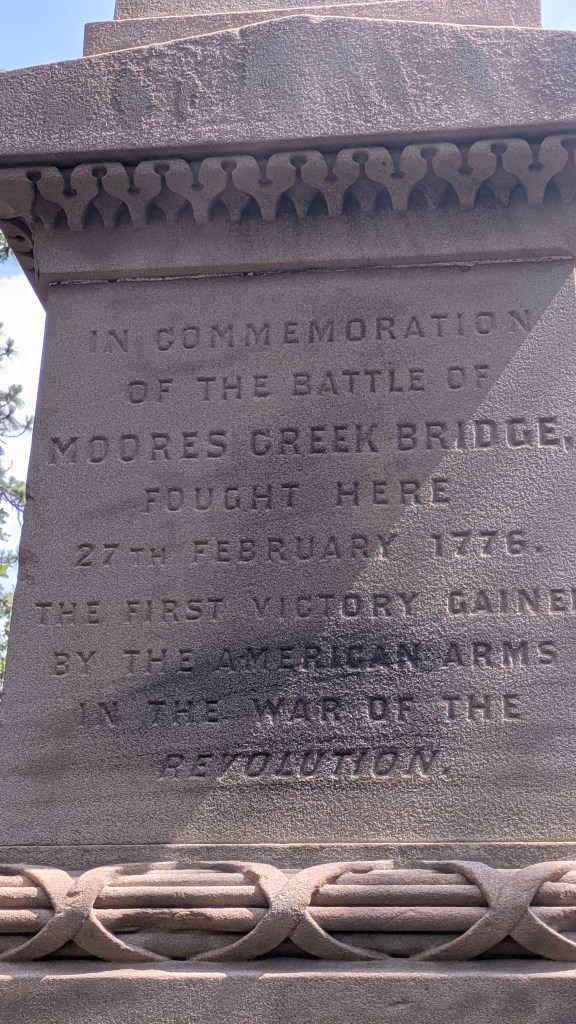
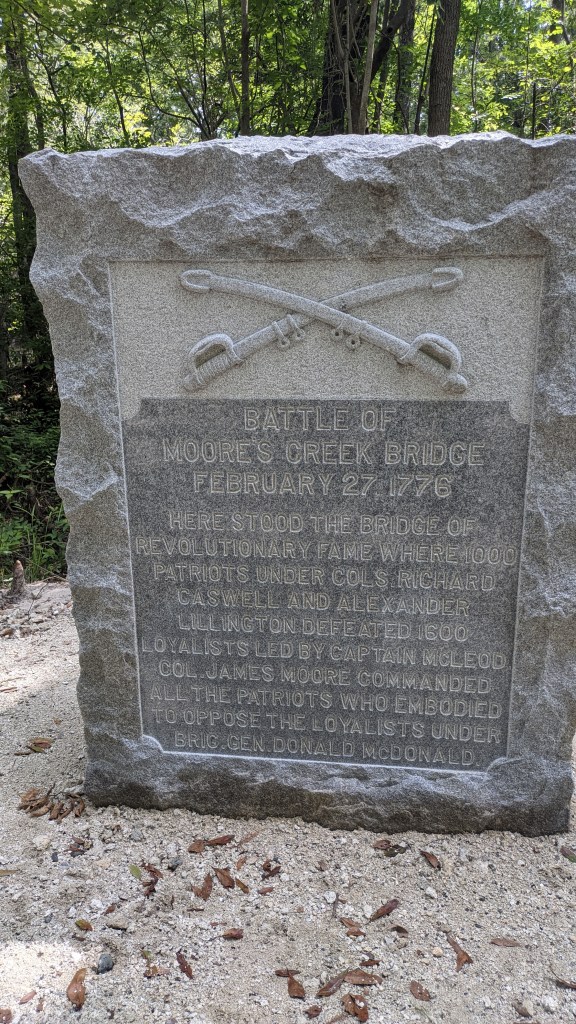
This was Moore’s Creek, the site of the first victory over the British Empire in the early days of the Revolutionary War.
In early 1776, British Royal Governor Josiah Martin initiated a plan to reassert control in North Carolina. Martin coordinated his efforts with Lord George Germain, the American Secretary of State, who dispatched a British army under Maj. Gen. Henry Clinton to assist Martin.
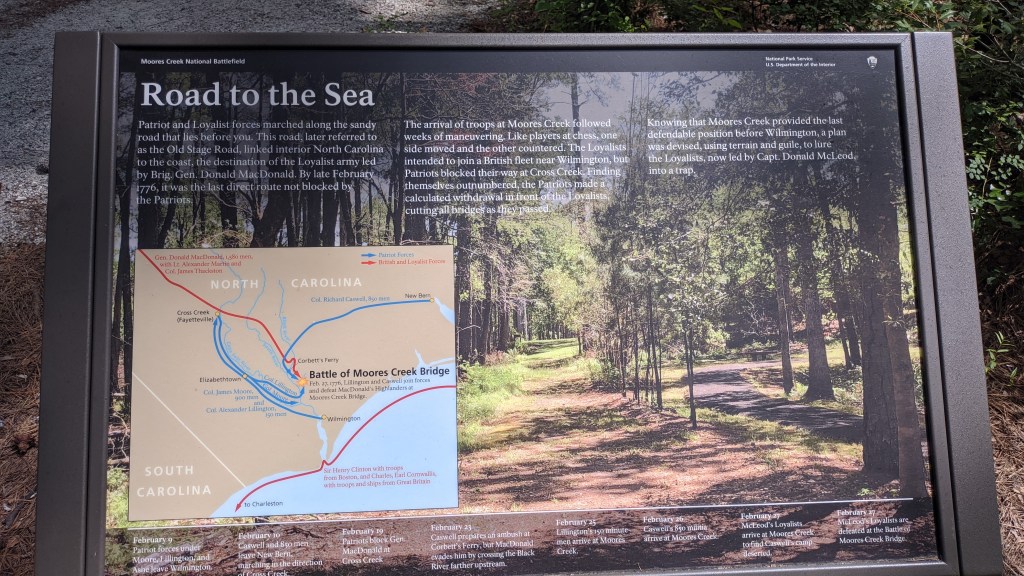
In preparation for Clinton’s arrival off the coast, Martin issued a call to arms for all Loyalists on January 10. The men who turned out, largely of Scottish descent, assembled at Cross Creek (modern Fayetteville) under Brig. Gen. Donald MacDonald.
On February 18, MacDonald broke camp and marched for the coast to rendezvous with Clinton.
Continental Col. James Moore hoped to intercept MacDonald before he could reach the coast.
Moore directed Col. Richard Caswell with a force of militia to block the Loyalists’ path.
Caswell ultimately assumed a position at Moores Creek Bridge.
Shortly after midnight on February 27, MacDonald formed his men and headed toward the bridge.
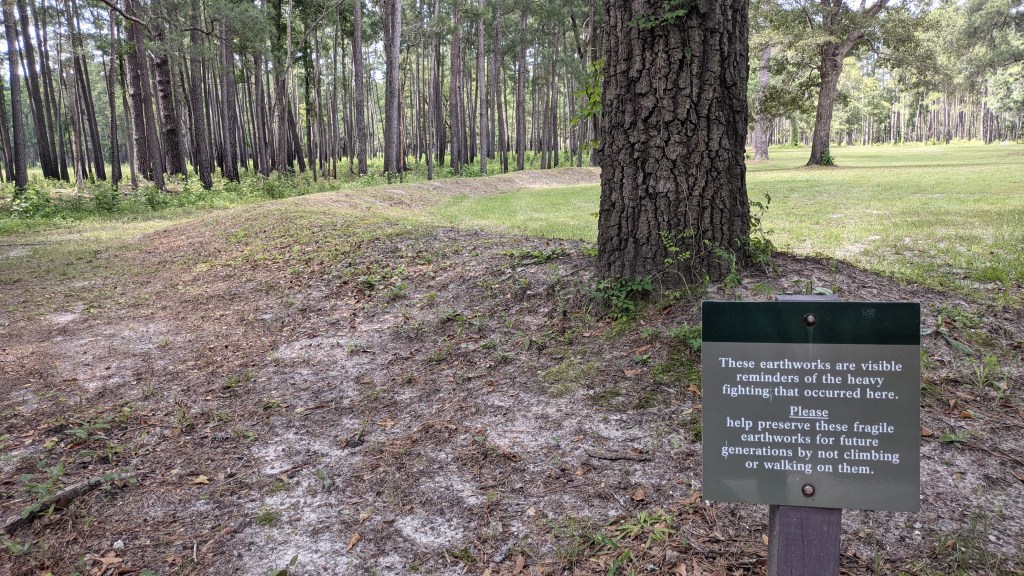
Preparing for the Loyalist approach, Caswell’s men removed the bridge stringers and constructed earthworks on the east bank of the creek.
The Loyalists soon ran into Caswell’s pickets.
As the fighting intensified, Loyalist Capt. John Campbell shouted “King George and Broadswords” and, along with Capt. McLeod, led his company across the creek. MacDonald ordered a charge.
With, as the monument notes, “Splendid Courage”, McLeod, MacDonald, and about 50 highland Scots charged at the revolutionaries with Claymore swords.
As his men approached the Patriot works, Caswell opened with rifle and artillery fire.
The volleys devastated the Loyalist ranks and forced MacDonald to retreat. The highlanders lay slain in their kilts, most with their Claymore’s still in hand.
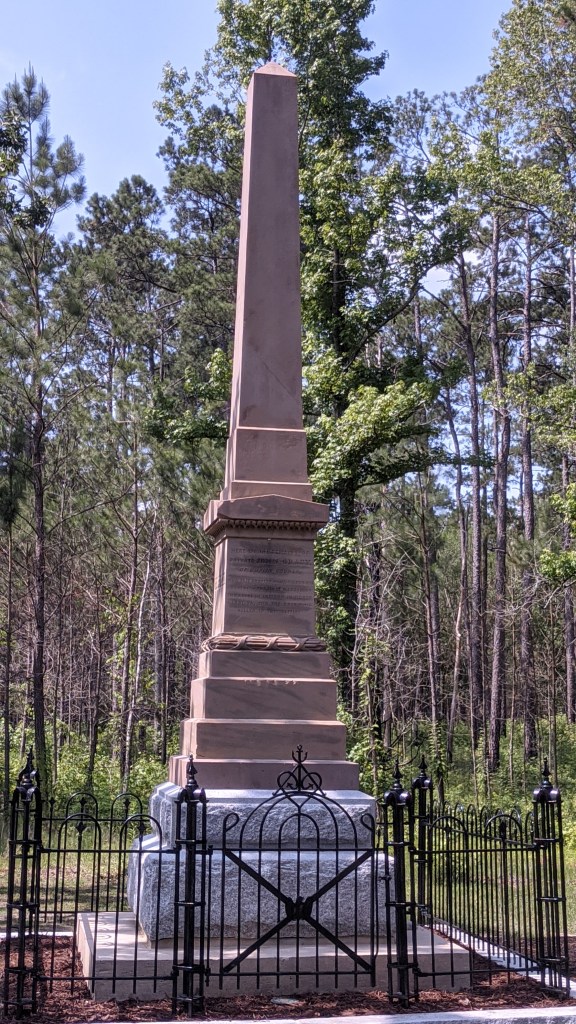
Even as their foes, the patriot militia and Continental forces were in awe of their courage. A monument to them was erected, noting they died with the highest valor, doing what they thought was right.
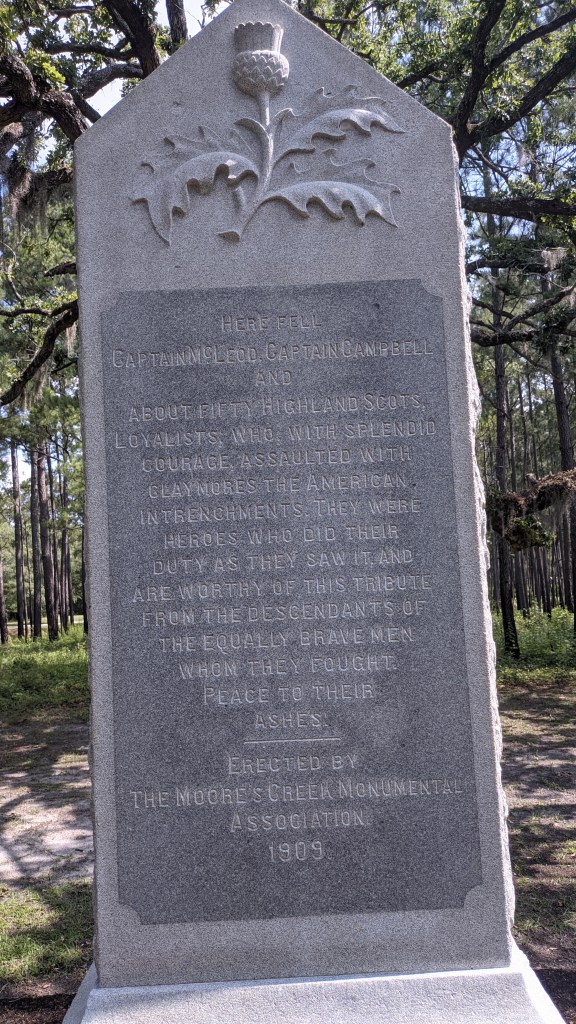
Ultimately 850 British Loyalists would be captured, as these 50 Highlanders were feasting in Valhalla.
Patriot women made their mark here also. Mary Slocumb, the wife of a patriot officer, rode 65 miles alone through the darkness to tend to the wounded after the battle. Her and a few other heroic women are buried here, that they may lie in this hallowed ground with the other heroes in this blood soaked soil.
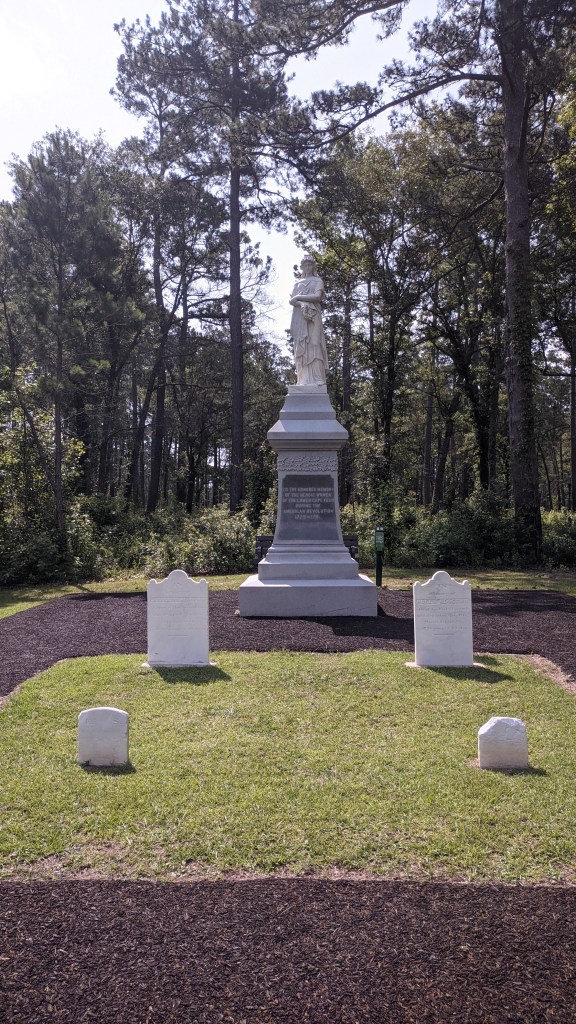
This battle was the first victory for the patriots of the American Revolution. It tipped the scales in NC leading to the April 12, 1776 adoption of the Halifax Resolves, making NC the first colony to instruct its delegates in the Continental Congress to vote for independence.
A subsequent repulsion of the British fleet at Fort Moultrie off the coast of Charleston convinced the British to abandon the Southern Campaign and focus on fighting in the northern colonies.
The bravery of the Patriots at Moore’s Creek not only gave their countrymen hope and inspired their will to resist, they also spared large portions of the south from further bloodshed.
On this spot a nation that would become a beacon of liberty for the entire planet was born.
Hail the heroes of Moore’s Creek!
May you be inspired by their choice to stand up, and not become the weak link in the chain of history!





 The Proud Tribalist